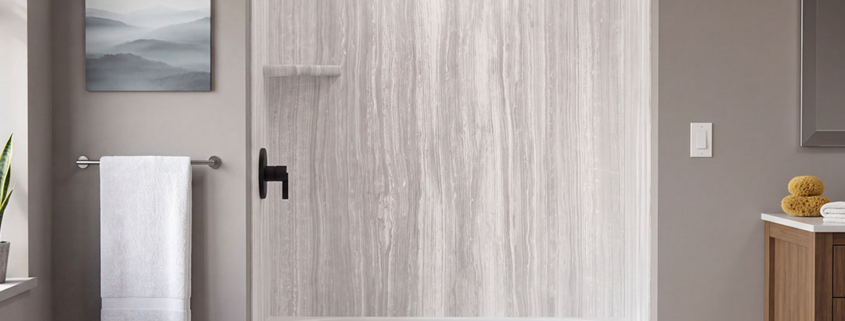
Shower Tub Combo vs. Walk-In Shower: Which Is Right for Your Bathroom?
Keep your shower tub combo, refresh it, or convert to a walk-in shower? Compare cost, DIY difficulty, and resale impact before you remodel.


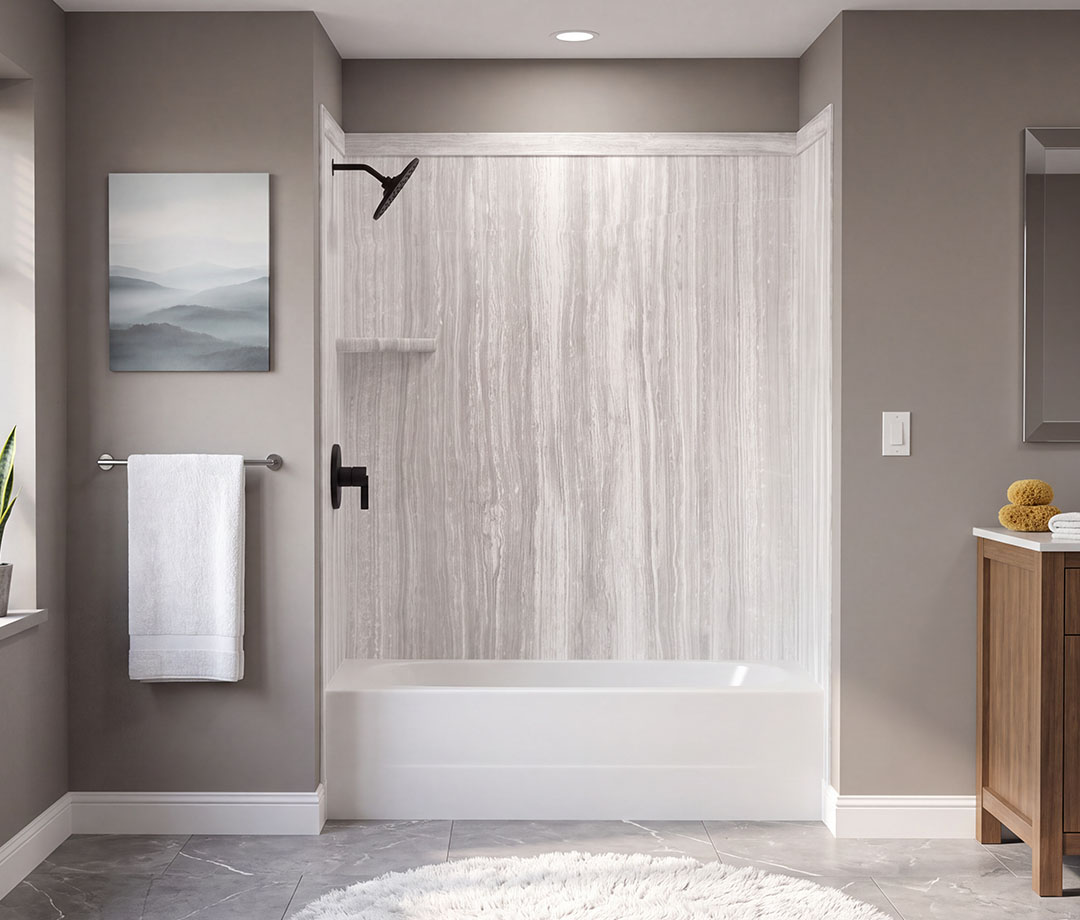
Your tub surround is cracked, stained, or just tired. Maybe you’ve already run through the signs it’s time to replace your tub surround and the answer is clearly yes. Now comes the bigger question: do you replace it with the same thing, or is this the moment to change the layout entirely?
There’s no universally right answer. The right call depends on who uses the bathroom, how long you plan to stay, and how much demolition you’re willing to take on. This guide walks through each path so you can pick the one that fits your home and your budget.
The bathtub shower combo is the most common setup in American homes for a reason. It does two jobs in one standard 60-inch alcove. Keep yours if any of this sounds familiar:
If you’re keeping the combo, the good news is that you may not need to replace the tub at all. If the tub itself is sound, new walls alone can make the space look brand new.
A tub-to-shower conversion is one of the most popular bathroom upgrades, and for many households it’s the right move. Consider converting if:
The tradeoff is scope. Converting means removing the tub, adapting the drain, and setting a new base. That is more work than refreshing walls, but it’s very manageable when you keep the shower in the same 60-inch footprint the tub occupied.
| Refresh the combo | Rebuild the combo | Convert to walk-in shower | |
|---|---|---|---|
| What changes | Walls only | Tub and walls | Tub removed; new base and walls |
| Plumbing work | None | Minimal | Drain adapted; valve may move |
| DIY difficulty | Beginner-friendly | Intermediate | Intermediate to advanced |
| Typical timeline | A weekend | 2 to 4 days | 2 to 5 days |
| Accessibility | Unchanged | Unchanged | Much better |
| Resale impact | Neutral to positive | Neutral to positive | Positive if another tub remains |
| Cleaning | Easy with grout-free panels | Easy with grout-free panels | Easiest, especially with a low threshold |
Timelines assume a standard 60-inch alcove and no hidden water damage. Rot behind old walls is the most common surprise, so budget a little time and money for it on any path.
Here’s the sequence for converting a standard 60-inch alcove tub to a walk-in shower. Steps marked Pro are where most DIYers bring in a licensed plumber.
Check local codes first. Moving drain or supply lines usually requires a permit. Your local building department can tell you what applies.
Whichever path you choose, the walls are the biggest visual change and often the biggest labor cost. Traditional tile means backer board, waterproofing, setting, and grouting, which can add days to a project. It also leaves you with grout lines to scrub for years.
FlexStone panels are built to skip all of that. They’re a lightweight composite, under 1 pound per square foot, with a stone look sampled from real slabs. You cut them to size, glue them directly to drywall or a backer board with the included adhesive, and seal the joints with color-matched silicone. No grout and no sealing.
Every kit comes with the panels, trim, adhesive, silicone, and a corner shelf, so you’re not piecing together supplies from three aisles.
A DIY wall refresh is the least expensive path by a wide margin. A contractor-installed conversion with custom tile and frameless glass is the most expensive.
| Path | DIY cost (approx.) | Contractor cost (approx.) | Biggest cost drivers |
|---|---|---|---|
| Refresh the combo (new walls) | [FlexStone kit price] + tools | $2,000 to $4,000 | Wall material, demolition |
| Rebuild the combo (new tub and walls) | $1,000 to $3,000 | $3,000 to $8,000 | Tub material, disposal, wall repair |
| Convert to walk-in shower | $1,500 to $4,000 | $6,000 to $12,000+ | Drain and valve changes, tile vs. panels, glass door |
Figures are rough national ranges for a standard 60-inch alcove. Labor rates vary a lot by region. The biggest swing factor on a conversion is the walls: choosing panels instead of custom tile can cut days of labor from the job.
Go with a framed or sliding door instead of frameless glass.
Answer these four questions in order. The first “yes” points to your path.
Ready to start? Find the FlexStone kit that fits your space, or watch the installation video to see how a weekend wall install comes together.
Keep your shower tub combo, refresh it, or convert to a walk-in shower? Compare cost, DIY difficulty, and resale impact before you remodel.
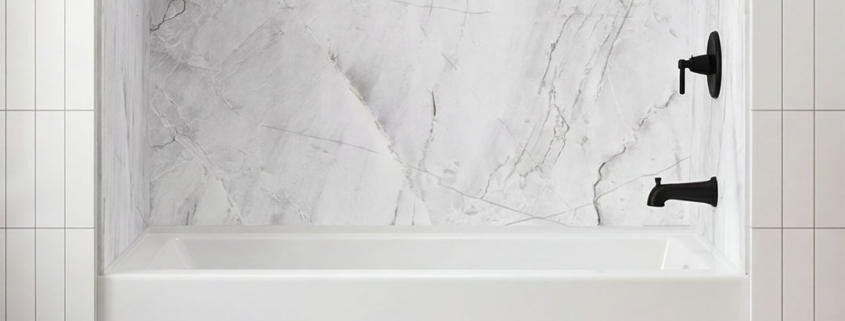
Planning a bathroom remodel? Compare tub surround and shower surround materials, sizes and costs, plus tips for a confident DIY install.
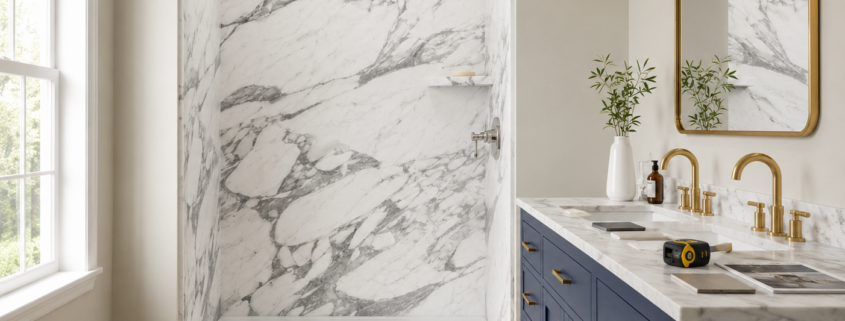
Learn how to choose a shower/tub kit that fits your space and lasts. Compare shower stall kits and walk-in shower kits before you buy.
Visit the FlexStone Support Center for step-by-step care instructions and tips to keep your tub surround looking fresh for years.