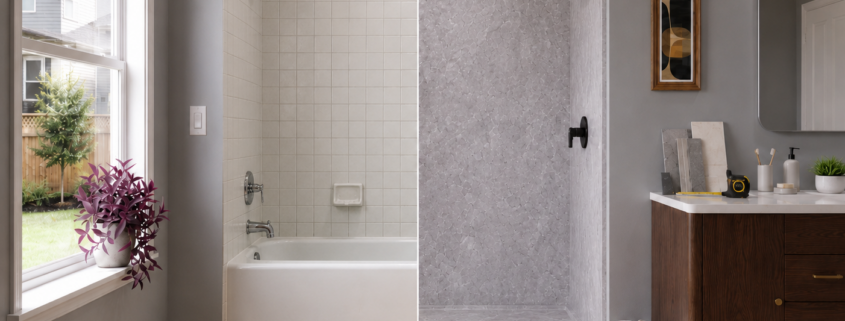
Shower Wall Panels vs. Tile: Which Is Really Better for a DIY Remodel?
Tub surround maintenance made simple. Learn cleaning routines, mistakes to avoid, and why FlexStone’s grout-free panels stay fresh for years.

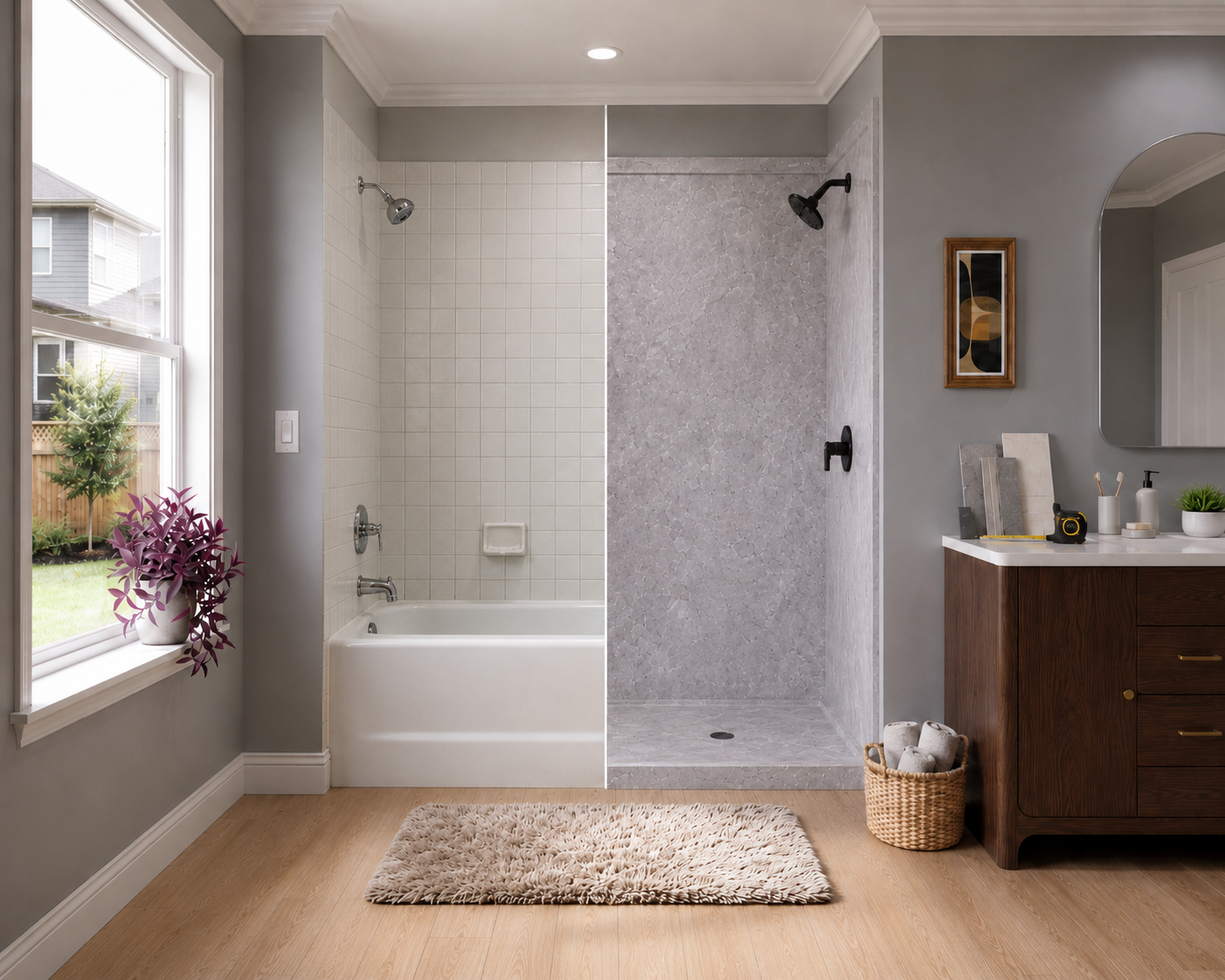
If you’re planning a bathroom remodel, you’ve probably landed on the same question a lot of homeowners ask before they pick up a single tool: shower wall panels vs. tile — which one is the better choice when you’re doing the work yourself?
Both materials can deliver a beautiful, stone-inspired shower. But “beautiful” isn’t the only thing that matters once the project is underway. Installation time, long-term maintenance, mold resistance, and total cost all look very different depending on which material you choose. Here’s an honest, side-by-side comparison to help you decide which is the best shower wall material for your DIY remodel.
Ceramic and natural stone tile can produce a stunning shower, but the installation process is involved. A typical tile job means prepping the substrate, installing a waterproofing membrane, planning your layout, cutting tile to fit around fixtures and corners, setting each piece individually, waiting for thinset to cure, and then grouting and sealing. Depending on the size of your shower and your experience level, that process can stretch across several days, sometimes longer.
Shower wall panels take a different approach. FlexStone panels are lightweight and trim-to-fit, which means they can often be installed directly over an existing, clean and waterproof substrate without a full tear-out. The panels don’t require any special equipment and can be trimmed with common tools like a razor blade or a jigsaw on the spot to get a perfect fit for your space. Because there’s no individual tile-setting or grout work, a DIY shower panel installation typically moves through fewer steps and fewer dry-time delays than a tile project of the same size.
That said, “faster” doesn’t mean “no planning required.” Panel installation still calls for accurate measuring, the right adhesive and tools, and a bit of patience around seams, corners, and fixtures. Reading through the installation guide or watching a video walkthrough before you start will save you time and prevent avoidable mistakes, no matter which material you choose.
This is where a lot of homeowners make their final decision. Tile showers rely on grout lines to hold everything together, and grout is porous. That means it absorbs moisture, soap residue, and body oils over time — which shows up as discoloration, staining, and a surface that needs regular scrubbing to look clean. Most tile showers also need their grout resealed periodically to keep water from working its way in.
FlexStone shower wall panels are built as large, seamless sections, so there are no grout lines to maintain. Wiping down a panel wall after a shower takes a fraction of the time of scrubbing grout with a brush, and there’s no annual resealing schedule to keep on your calendar. If low-maintenance, no-grout shower walls are high on your priority list, this is one of the clearest practical differences between the two materials.
Grout’s porous texture doesn’t just make it harder to clean; it also gives mold and mildew a place to take hold, especially in a humid shower environment. Even with regular cleaning, dark grout lines are one of the most common trouble spots homeowners deal with in a tiled shower, and once mildew works into the grout, it can be difficult to fully remove.
Because FlexStone panels are a solid, nonporous surface with no grout joints, there’s no seam network for moisture and mildew to settle into. That doesn’t mean a panel shower needs zero care. Regular rinsing and wiping is still a good habit in any shower, as well as regular inspection of the silicone seams to ensure they’re sealed — but this does mean less time spent scrubbing stubborn grout lines and reapplying sealant to keep mold at bay.
Cost is rarely just the price tag on the material, so it’s worth breaking down what you’re paying for with each option.
Tile typically involves the tile itself, thinset, grout, sealer, waterproofing membrane, and specialty tools like a wet saw and trowels. If you don’t already own these tools, that adds to your upfront investment. Ongoing costs include grout sealer and the time (or professional help) needed to maintain and eventually regrout the shower.
FlexStone panels are priced as a kit sized to your shower, which makes it easier to know your material cost upfront. Because installation doesn’t require specialty tile tools or a membrane system in most applications, your tool investment is typically lower. Long-term, the absence of grout means you’re not budgeting for replacement grout work down the road.
Neither material is automatically “cheaper” in every scenario; a small tile accent or intricate mosaic pattern can be an affordable design detail, and a large custom panel kit is a bigger investment than a basic ceramic tile. But when you add up materials, tools, installation time, and years of upkeep, panels generally come out ahead for homeowners who want a straightforward, DIY-friendly shower wall material without an ongoing maintenance routine.
Tile still has a place in bathroom design, particularly for homeowners who want intricate patterns, mixed materials, or small decorative accents where grout lines are part of the visual style. If that’s the look you’re after, and you don’t mind spending the time and money to get that custom look, tile remains a solid, time-tested option.
But if your priority is a realistic stone look with a straightforward installation, minimal long-term maintenance, and shower walls that stay easier to clean year after year, shower wall panels are worth serious consideration. FlexStone panels are designed to give homeowners the beautiful appearance of natural stone, without the grout upkeep, without the mold-prone seams, and without needing professional-level tiling skills to get a finished result you’re proud of.
Every remodel comes with its own layout, budget, and skill level to plan around, so take stock of your shower’s specific needs, your lifestyle, preferences, and design choices before you decide. Whichever direction you choose, going in with a clear picture of the installation process and long-term care involved will set your project up for success.
Ready to see how panels could work in your bathroom? Explore FlexStone Shower Systems to browse available colors, find the right kit size for your shower, and get a closer look at what a no-grout, DIY-friendly remodel reall
Tub surround maintenance made simple. Learn cleaning routines, mistakes to avoid, and why FlexStone’s grout-free panels stay fresh for years.
Tub surround maintenance made simple. Learn cleaning routines, mistakes to avoid, and why FlexStone’s grout-free panels stay fresh for years.
Tub surround maintenance made simple. Learn cleaning routines, mistakes to avoid, and why FlexStone’s grout-free panels stay fresh for years.
Visit the FlexStone Support Center for step-by-step care instructions and tips to keep your tub surround looking fresh for years.